Monday, June 05, 2006

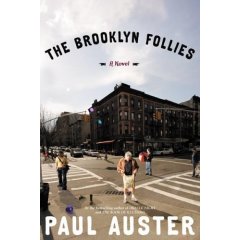
BOOK REVIEW: The Brooklyn Follies by Paul Auster

Good opening lines and paragraphs are tough to find but Paul Auster came up with a doozy for The Brooklyn Follies: "I was looking for a quiet place to die. Someone recommended Brooklyn, and so the next morning I traveled down there…" The I is Nathan Glass; divorced, retired insurance salesman, estranged from his daughter, lung cancer patient (in remission) who's looking for a place to die. To wile away the moments until then, Nathan begins by consigning to paper the human blunders, foibles, inane act and embarrassments committed by himself and others. He calls these his "Brooklyn Follies."

Soon after his arrival in Brooklyn, Nathan runs across his nephew Tom, working at a local bookstore. A scholar destined for greatness, Tom has derailed and after years of penance driving a taxi cab, has chosen to sell rare books. What follows is a story of redemption, lost souls and the lives that intersect with Nathan and Tom's saga.

Nathan is a lovable rogue. He exists in the calm eye of a storm while all around him chaos rules. His reentry into Tom's life helps Tom regain his will to live and slowly reengage life. The novel thrusts the reader into this storm, disorienting the smooth flow of plot by adding new characters and continually altering the pace. The chaos is thrilling and serves to absorb the reader more fully into the search of the main characters.

Near the end of Brooklyn Follies, Auster shares a thought that permeates the novel: "Most lives vanish. A person dies, and little by little all traces of that life disappear." Nathan goes on to wonder who publishes books about the forgotten one. Auster has answered that question with The Brooklyn Follies, a novel chockfull of forgotten ones and little lives. Redemption for Nathan and another enthralling read from a master novelist for those of us fortunate enough to enter his Brooklyn.

As Auster reminds us, "Never underestimate the power of books."

Read my review at Armchair Interviews - The Brooklyn Follies.

Sunday, June 04, 2006

Movie Recommendation

I went to see Night Watch (NOCHNOI DOZOR), a new film that's playing at the local rep cinema. As the film's website says:
NIGHT WATCH (NOCHNOI DOZOR) is the first installment of a trilogy based on the best-selling Russian sci-fi novels of Sergei Lukyanenko (which also includes Day Watch and Dusk Watch). This visionary horror fantasy film features a dazzling mix of mind-blowing effects, adrenaline-fuelled action and suspenseful terror.

NIGHT WATCH (NOCHNOI DOZOR) was an instant smash hit in its native Russia when it was released in July 2004 shattering all previous box office records. Made for a mere $4 million, the film surpassed both LORD OF THE RINGS: THE RETURN OF THE KING and SPIDER-MAN 2 at the Russian box office. Internationally acclaimed, it was also Russia's contender for the 2004 foreign language Oscar® award.
The film is dark, visionary and incredibly cool. I would highly recommend it and I will be ordering my copies of Sergei Lukyanenko's books today.

Night Watch is being released by William Heinemann (in English) at the end of July and the sequel Day Watch is scheduled for release in January 2007. No word yet on a release date for Dusk Watch, the final volume in the trilogy.

Saturday, June 03, 2006

Weekend Reading

It's been a crazy week and I am very tired. I slept in way too late today and I think I might have thrown off my sleep schedule just a bit.

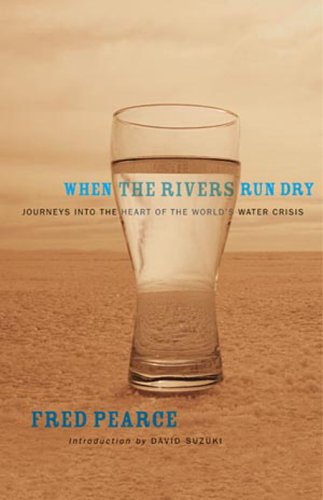
So, the mandated cleaning is taking second place to reading. I'm pleading tiredness but really I've been sucked in by When the Rivers Run Dry: Journeys into the heart of the world’s water crisis by Fred Pearce. Completely enthralling is all I will say at this point and utterly terrifying at the same time. Along the lines of an accident waiting to happen. I'll post my review once I'm done.

BOOK REVIEW: Confessions of a Teen Nanny by Victoria Ashton

In an effort to get all my past reviews posted here to create "archives", over the next few weeks I'll be adding some reviews published in 2005. They're all great books so check them out!

Anyone who loved Bergdorf Blondes or Mean Girls is going to love Confessions of a Teen Nanny.

Liz and Adrienne have been best friends since they were little. When friends of her boss need a new nanny, Liz convinces Adrienne to sign on for a two-week stint with precocious eight-year-old Emma Warner. Adrienne and Liz quickly get sucked into the lifestyle of the rich and famous lived by Emma's older sister Cameron--and very quickly their lives spin out of control. How they find their footing in this glamorous world is a delightfully, fast-paced romp.

Told in short, snappy chapters, Ashton has evoked a world where one keeps expecting Paris Hilton to step out of the elevator. Heavy on style and ferociously paced, occasionally the reader is left wishing for a bit more character development.

Sure to appeal to all young fashionistas-- and a few Moms and older sisters may try to sneak off with it, too!

Originally posted on Armchair Interviews.

Friday, June 02, 2006

BOOK REVIEW: The Priest's Madonna by Amy Hassinger

In 1896 Bérenger Saunière, the priest of Rennes-le-Château, suddenly became very wealthy. Has he uncovered clues leading to the hidden treasure of the Knights Templar or information that he is using to blackmail the Catholic Church?

The Priest’s Madonna by Amy Hassinger is based on historical facts: there really was a priest named Bérenger Saunière who came into a great deal of money and whose housekeeper Marie was rumoured to also be his lover. The villagers of Rennes-le-Château dubbed her “the Priest’s Madonna” and Marie carried Bérenger’s secrets to her grave, even though many suspected she knew the truth behind his wealth. Hassinger has taken historical fact, woven in possibility and created a riveting novel that gives Marie a voice to tell her story of faith and doubt, desire and chasteness.

Comparisons will inevitably be made to The Da Vinci Code; however The Priest’s Madonna is more than a clone. While the mystery of what Bérenger may have found is tantalizing, Hassinger’s novel is about relationships and faith, about love, obsession and the consequences of our choices.

Marie and her family moved to Rennes-le-Château in the Languedoc region of France in 1884. Initially receiving a chilly welcome from the villagers, they are integrated into the village life more fully once the new priest begins to board with them. Marie is drawn to the handsome young priest and eventually becomes his housekeeper, eschewing opportunities for marriage and a family of her own.

Marie’s story is told in counterpoint to that of Miryam (Mary Magdalen), the woman many suspect was the lover of Yeshua (Jesus). In the question and answer section of her website, Hassinger addresses why she chose to interweave the Marie/Bérenger story with that of Mary Magdalen/Jesus.

“The parallels with the Marie narrative are clear: forbidden love between a woman and a holy man, the themes of spiritual sickness and health, of faith and doubt, the search for what is meaningful and holy in the physical world.”

Both Marie and Miryam are educated beyond the norm for the villages where they are raised. These strong women are plagued by doubts, demons and seek truth no matter what the cost. Marie chooses to continue to learn, to investigate the Cathars who had settled her area of France and in so doing, learns that the Church is fallible. She chooses to imitate Bérenger, to “imitate his daring, to honor my own thirst for truth over doctrine.” Learning helped both women on their journey to become the consorts of spiritual leaders.

By juxtaposing Marie and Miryam’s stories, Hassinger has crafted a novel that illustrates the timelessness of her themes. Interweaving the history of France at the turn of the twentieth century, scenes of ancient Judea, and the romantic and religious journey of a spirited and intense heroine, The Priest’s Madonna transcends its historical setting, becoming a novel for the seeker within all of us.

The Priest’s Madonna is Amy Hassinger’s second novel, the follow-up to her critically acclaimed debut novel Nina: Adolescence. Hassinger also wrote Finding Katahdin: An Exploration of Maine's Past published in 2001. A graduate of Barnard College and the Iowa Writers' Workshop, where she received her MFA in fiction writing, she and her family make their home in Urbana, Illinois.

See the review posted at The Book Depository - The Priest's Madonna.

Thursday, June 01, 2006

Black Books, a favourite TV show

I don't know about you but there is so much for me to love about British TV shows. My hands-down favourite? Black Books...it's just so...black!

Thanks to Confessions of an Idiosyncratic Mind for bring this fabulous link to my attention. This is Bernard in all his glory, enjoy.

My Hor-O-Scopes, Courtesy of Crazy Aunt Purl

It's that time of the month again chez Crazy Aunt Purl - Hor-O-Scopes. Given the fracas from last month, and the general bleck of May, I have high hopes for June. What gives that hope you ask? Why the bold section below! Bring on the joy June...
SCORPIO (Oct. 24 - Nov. 21)
I heard it through the Pissed-Off-At-Astrology Grapevine that Scorpios were really unhappy with the way most of last month went. How do I know this? Did you not hear all the Cancers also complaining that Astrology had FAILED us, and we were giving up stars altogether, and also, hand me that bottle of Cabernet right now before I smack you upside the head with this here mean and ugly stick? So, June is here, and I know you're still kind of mad about May, but you simply cannot get revenge on a whole month, so you must let it go. The problem is of course Saturn (Damn you, fat planet of hardship!) and take it from someone who just spent seven long years wandering in the desert of Saturn, it does get better. The best thing about you and June is your real willingness to try new things to revitalize your life. It's rare that ya'll don't dissect through the consequences or results of all your actions, and this month you will feel liberated and (mostly) care-free, willing to travel to a new place, meet new people, all of it with a who-knows-what-could-happen attitude. This, Scorpio, is a very positive development. Walk lightly, and leave the mean and ugly stick for someone else. Maybe the Virgos could use it.

Paul Auster wins Spain's 2006 Prince of Asturias Prize for Literature

I saw this today on Rake's Progress:
Paul Auster, author of novels including "Mr. Vertigo" and "The New York Trilogy," has won Spain's Prince of Asturias Prize for Literature for 2006, the prize giving foundation said on its Web site.

Auster, 59, also writes poetry and has written screenplays for movies including "Smoke" and "Blue in the Face." He is considered one of the "most relevant" U.S. authors of his generation, the Prince of Asturias Foundation said.

His work "creates a literary universe around chance and the search for identity, where reality and fantasy invade people's every day space," according to the foundation.
Congratulations to Paul Auster. I really enjoy his work and I was lucky enough to read and review The Brooklyn Follies last fall.

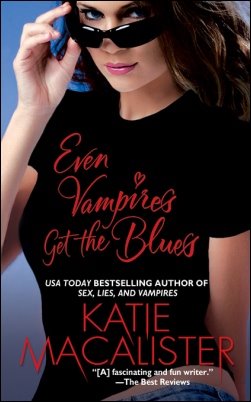
BOOK REVIEW: Even Vampires Get the Blues by Katie MacAlister

The fourth entry in Katie MacAlister’s paranormal romance series featuring the Dark Ones is sure to satisfy her many fans and earn her some new ones. Full of her trademark sense of humour and kooky characters, Even Vampires Get the Blues is the story of Paen, a Moravian Dark One doomed to spend his life in search of the woman who can redeem his soul. There’s just one problem – Paen doesn’t believe in love.

Samantha Cosse, a half-elf recently kicked out of the Order of Diviners, has just opened her own private investigation agency with her cousin Clare, a lingerie model in denial about her status as a flower-eating faery. Sam and Paen’s paths cross when he hires her to track down the Jilin God, a lost statue that he needs in five days' time or else his mother's soul is forfeit to a demon.

Featuring many of the denizens of the Otherworld met in previous novels – Guardians, Diviners and Mages to name a few – MacAlister continues to flesh-out the fascinating world inhabited by her supernatural heros and heroines. In Even Vampires Get the Blues MacAlister provides more of the history and creation of Moravians through Paen’s hunt for the Simia Gestor Coda. The Coda is rumoured to contain the details about the origins of Dark Ones, including a way to unmake the curse binding them to their soulless state, without involving a Beloved.

The secondary romance of Clare and Finn, Paen’s brother, helps to offset the tension caused by the time-limited quest for the Jilin God. Their playful interaction helps lighten the tone to one in keeping with reader’s expectations of MacAlister’s works.

New York Times bestselling author Katie MacAlister writes historical, contemporary, paranormal, and young adult romances (as Katie Maxwell), paranormal thrillers, and historical mysteries. Fans unable to wait until May 2007 for the next Dark Ones romance will be able to get their fix in September 2006 in the paranormal anthology Just One Sip, featuring the short story "Bring Out Your Dead.”
See the review posted at Curled Up with a Good Book - Even Vampires Get the Blues.
Wednesday, May 31, 2006

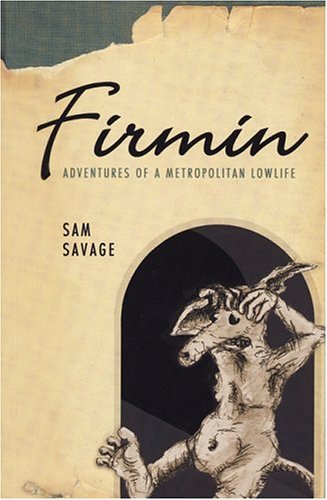
BOOK REVIEW: Firmin: Adventures of a Metropolitan Lowlife by Sam Savage

Firmin begins life at a disadvantage. Born the runt of the litter to an alcholic mother sheltering in the basement of an independent bookstore, Firmin begins to eat pages of books in order to survive. When Firmin realizes the books he’s digested have given him the ability to read, his love affair with literature is born. Existing through a daily diet of nourishing classics, Firmin quickly becomes an outsider existing in a no-mans land between what he is (a rat) and what he wishes to be (human). Sam Savage’s Firmin: Adventures of a Metropolitan Lowlife can be read as a quirky little tale about the book-loving rat in all of us, or as a philosophical look at life. It is a witty novella and a powerful homage to a life lived through and around books and the enduring influence of great writers.

Firmin’s initial consumption is rather indiscriminate, one book tasting much like any other. Soon however, Firmin notices subtle flavour differences between works and as his understanding of literature develops, his need for literal consumption diminishes. Firmin reads and “lets the books center my dreams, and sometimes I dreamed myself back into the books.” Any true booklover has often wished to disappear into a book; the weak becomes strong, the housebound travels and the voiceless thunders speeches to the masses. Firmin finds relief from his outsider status by becoming the characters, “I must constantly remind myself, sometimes by means of a rap on the head, that Eisenhower is real while Oliver Twist is not.”

The name Firmin comes from the Latin Firminus meaning “firm” and is the name of several early saints, but Firmin the rat is anything but firm or saintly. He worships at and is torn between two temples; Pembroke Books and the Rialto movie theatre; knowledge and lust; sages and his “lovelies” (the ethereal actresses that parade nude through the late night movies at the Rialto).

Savage positions before the reader these two elemental aspects of humanity; the earthy nature of the body and the spiritual realm of the mind. By casting this dichotomy into the body of a conscious rat, he is able to mock our delusions and perceptions. Holding a mirror up to our souls in the character of Firmin, we question our essential selves and our understanding of reality. Should our perceptions be taken as true or, like Firmin, do we delude ourselves into believing we are other than what we are?

Both of Firmin’s temples offer an escape from reality and the pull from both is strong. By casting the theatre into the role of seducer, Savage resurrects the worry that movies will destroy books. While today it is clear that books have survived the assault of movies and television, the concern for the relevance of the great works of literature in modern society continues.

Savage holds a doctoral degree in Philosophy from Yale University so it should come as no surprise that this slim volume is full of more questions than answers. Whether Firmin, capable of consciousness and immersion into the great works of fiction, is a better mirror for humanity’s frailities because he is a rat is difficult to state. What is apparent is that Firmin: Adventures of a Metropolitan Lowlife merits repeated readings for Savage has filled its pages with much food for thought. This gem of a book should be a treasured addition to any bibliophile’s bookshelf.

See the review posted at ReadySteadyBooks - Firmin.

Tuesday, May 30, 2006

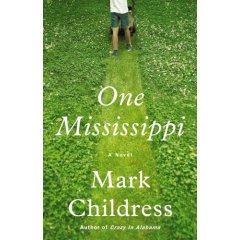
BOOK REVIEW: One Mississippi by Mark Childress

Daniel Musgrove’s family has moved six times in 10 years. That’s what happens when your Dad is a saleman for TriDex, a company that moves its sales force around every year or two to keep them on their toes. Daniel’s mother is thrilled to be moving home to the south, closer to family and a place where her toes will finally be warm, but the Musgrove children are decidedly unhappy.

Things quickly go from bad to crazy in characteristic Mark Childress style. On the drive to Mississippi the van carrying all the Musgroves’ belongings is destroyed in an accident. Daniel and his siblings start at their new school on the first day of court-ordered integration. A few months later their Granny dies and crazy Uncle Jacko comes to live with them. All of these are minor happenings compared to Arnita Beecham, a beautiful black girl, winning Prom Queen and, later the same night, being run down by another student as she bicycles home. Suddenly the hidden tensions rise to the surface, spiraling ever further out of control. The match that finally sets it all alight - Arnita comes out of her coma believing she is white.

One Mississippi carries on in the trademark narrative style of Crazy in Alabama and Tender, a form descended from generations of front porch storytelling sessions - luminously descriptive, yet full of caustic wit. Childress peoples his novels with exaggerated characters, misguided do-gooders and desperate loners, all in their own way demanding the reader’s empathy and understanding. The South is a strong character by itself in Childress’ novels, for it is only in these expertly crafted settings that his novels can exist. Time and place demand as much attention as the people strolling casually across the page.

Childress writes coming of age stories particularly well, effortlessly transporting the reader to the awkward days of adolescence.

“In high school it’s all about how you walk down the hall – whether you stroll through the flow or dart along the edges, whether you hold the stack of books on your hip with one hand (guys) or press them two-handed to your chest (sissies and girls.) Notes are scribbled and passed, rumors fanned and blown down the hall.”

One Mississippi feels like you’ve stepped into a world where the air is thick enough to chew, the lemonade is tart enough to kill a three-day thirst and the neighbours are friendly enough to invite y’all over for some southern fried chicken. This is the perfect read for the long, hot days of summer.

See the review at Armchair Interviews: One Mississippi.

Sunday, May 28, 2006

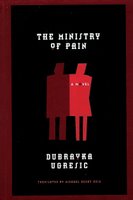
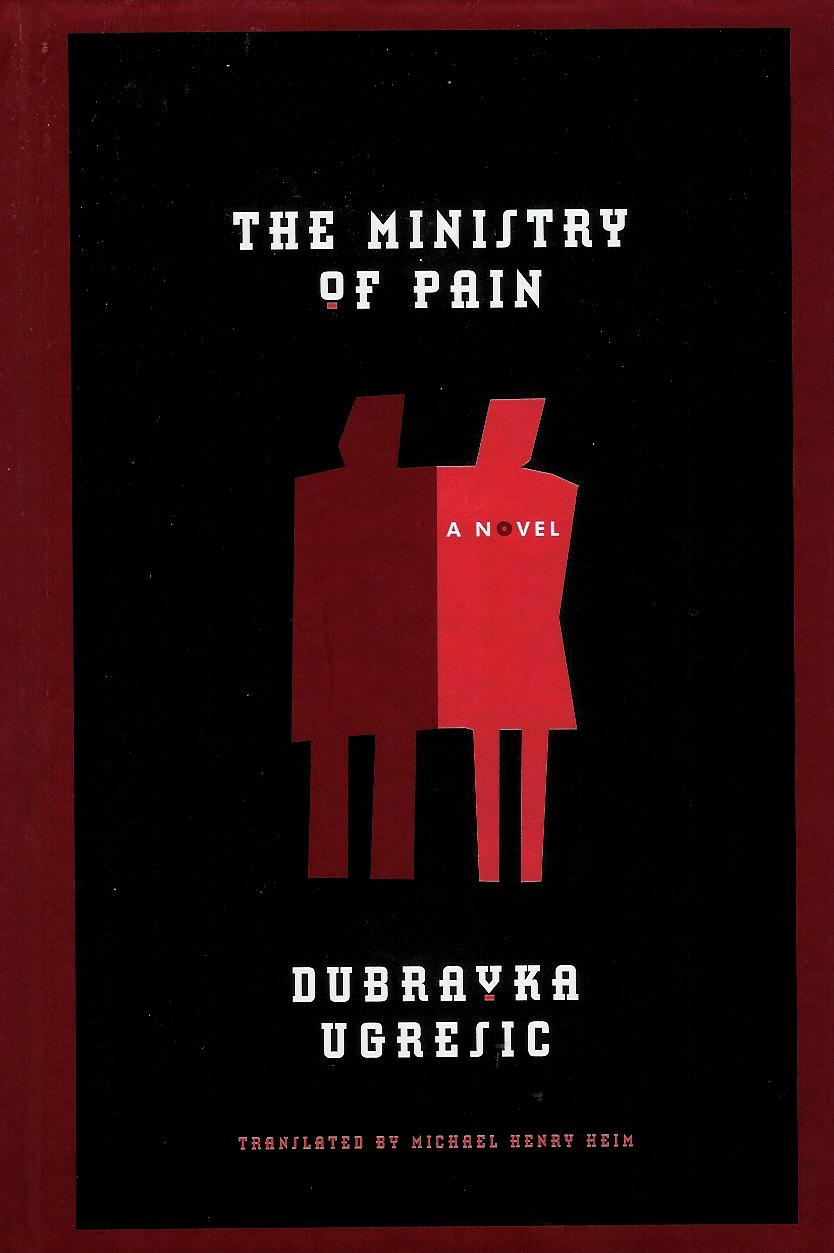
BOOK REVIEW: The Ministry of Pain by Dubravka Ugrešić

“…stimulating the memory was as much a manipulation of the past as banning it.”

The Ministry of Pain (Ministarstvo boli) explores what it means to be a refuge, to live in exile from your country. Told through the eyes of Tanja Lucic, a temporary teacher in the Department of Slavonic Languages at the University of Amsterdam, Dubravka Ugrešić’s novel follows Tanja’s journey as she and her students explore their memories of a lost country, language and the meaning of language.

Throughout The Ministry of Pain, Ugrešić invokes the idea that the life of an exile is like living in a fairy tale or a parallel world. Early in the novel Tanja states:

“I had the feeling I might well – if like Alice I should lose my footing and fall into a hole – end up in a third or fourth parallel world, because Amsterdam itself was my own parallel world. I experienced it as a dream, which meant it resonated with my reality. I tried to puzzle it out just as I tried to interpret my dreams.”

Fairy tales provide resolution, heros winning and justice prevailing. In a world of chaos, Ugrešić expresses that the simple plots and “literary heroes who are brave when ordinary people are cowardly, strong when ordinary people are weak, noble and good when people are mean and ignominious,” are what appeal in a country where “languages were used to curse, humiliate, kill, rape, and expel.”

For émigrés, exile means defeat and dysfunction. On her return from a trip to Zagreb, Tanja meets another émigré who councils her to forget anything as a way to create a new life for herself. Through his voice, Ugrešić suggests that for émigrés time moves slower than reality. Those left behind have moved on and adapted to the new reality while émigrés are still stuck in their own time. The return home means a return of the memories, and a search for a fairy tale land that no longer exists. To achieve peace and a release from the past, émigrés must forget using the “miraculous little erasers we all have in our brains.”

Ugrešić’s fundamental questions appear to be these: For those lost in time and place, does forced remembrance equal torture? Can pain lead to reconciliation, a penance that allows émigrés to live outside their former country without guilt? Ugrešić has created a novel that leaves the questions without answer, compelling each reader to search inside for an answer.

In The Ministry of Pain, there is much discussion among Tanja’s students on the value of Yugonostalgia: the yearning for a country and culture that have vanished into the maw of history. Ugrešić’s gift is in creating a novel that functions both as Yugonostalgia and a paean to the resilience of the human spirit.

Dubravka Ugrešić was born in the former Yugoslavia (Croatia), left her homeland in the 1993 and currently resides in The Netherlands. A novelist, essayist, and literary scholar, The Ministry of Pain is her seventh work to be published. Her books have been translated into over twenty languages. Ugrešić has received several international awards, including the Italian Premio Feronia 2004 (previously awarded to José Saramago, J.M. Coetzee, Günter Grass, Ismail Kadare, and Nadine Gordimer).

Michael Henry Heim, a professor of Slavic languages and literature at UCLA, translates works written in Russian, Czech, German, Serbo-Croatian. The Ministry of Pain is the fourth work by Ugrešić in whose translation he has been involved.

See the review posted at Curled Up with a Good Book - The Ministry of Pain.

Saturday, May 27, 2006

Thoughts on a Saturday

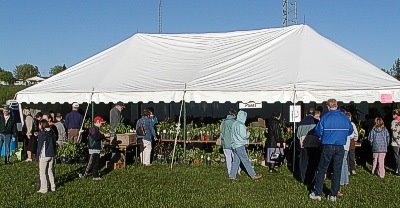
There is something about being wide awake at 3 am that makes getting up at 5:30 am rather difficult - so my day started without much sleep. It was already a busy morning at the Mennonite Relief Sale when I arrived shortly before 7 am. The plant tent had done some pretty brisk business on Friday night, selling over $2,000 of plants in a few short hours. The tables were looking rather picked over but more plant donations kept arriving throughout the morning so we were busy pricing and selling house plants, perennials and vegetables/herbs.

I picked up several new house plants: a really healthy coffee plant, a philodendron, Dracaena and a tiny baby palm. Hopefully I be able to find them all the proper light and humidity to keep them healthy.

I've spent most of the rest of my time reading and will have some new reviews to post as soon as they are posted on the review websites. David Long's new novel The Inhabited World causes a lot of reflection and Mark Childress returns to small-town life in the south of the 1970's in One Mississippi. Both will be out in early July.

For pure kooky fun, grab Shanna Swendson's Once Upon Stilettos, as ArmchairInterviews.com says, it's chick lit for the Buffy and Bewitched crowd.

Next on the reading pile? The Stolen Child by Keith Donohue, Ticknor by Sheila Heti and The Dodecahedron by Paul Glennon.

Friday, May 26, 2006

Type Books: Toronto's Newest Independent Bookstore

I'm posting this for my friends who don't read BookLust's great blog. Toronto has a new independent bookstore so you must all go forth and shop! You can find this gem at 883 Queen Street West and business hours are as follows: Mondays – Wednesdays and Saturdays from 10:00am to 6:00pm, Thursdays and Fridays from 10:00am to 8:00pm, and Sundays from noon to 5:00pm. Type's website is still under construction but given how cool their logo is, I can't wait to see the website in all its glory.

I know where I'll be going on my next trip into Toronto.

Wednesday, May 24, 2006

BOOK REVIEW: It's the Crude, Dude: war, big oil, and the fight for the planet

This review has been submitted to Alternatives Journal but I do not know when/if it will be included in their publication.

The Iraq Invasion as Smokescreen: Fight for Democracy or Oil?
It’s the Crude, Dude: war, big oil, and the fight for the planet, Linda McQuaig, Toronto: Anchor Canada, 2004, revised and updated 2005.


“…the Middle East, with 2/3 of the world’s oil and lowest cost, is still where the prize ultimately lies.” Dick Cheney, November 1999

Linda McQuaig, a journalist well-known for taking pokes at the big myths, now focuses on the largest. In It’s the Crude, Dude: War, Big Oil, and the Fight for the Planet, McQuaig aims squarely at the debate no one is having - Why was information on Iraq’s weapons of mass destruction falsified and why did the United States want to invade Iraq? During the 18 months since the falsification came to light, no commission or committee has been convened to investigate. It’s the Crude, Dude is an attempt to bring into perspective the US’s actions in Iraq by positioning them within the historical perspective of their behaviour in the Middle East, and their quest to control the world’s oil resources.

McQuaig posits that the Iraq invasion was already planned to serve the interests of Big Oil when Cheney was still CEO of Haliburton. Once George W. Bush took office, two key policies to benefit the oil industry were immediately implemented: withdrawal from the Kyoto Accord and the beginning of the invasion of Iraq. Bush and Cheney have continually put the interests of Big Oil before those of democracy, global law and the American citizen. The “war on terror” has provided the smokescreen of “national security”, creating the illusion that there are no competing interests at work within Bush’s administration.

The oil shortage has already begun, mostly unacknowledged by officials, and, thanks to NAFTA, Canada gave up its right to reduce oil exports to the US, unless we reduce our own consumption by the same amount. McQuaig believes this wake-up call needs to be heeded and the reliance on oil reduced if Canada hopes to weather the coming war between China (second in oil consumption) and the US over oil.

At a time when the world’s focus should be finding renewable energy sources and environmental conservation, the current US administration is rolling back environmental protections and promoting reliance on oil.

McQuaig doesn’t put forward anything Canadians don’t already know or suspect. It’s the Crude, Dude provides a starting point for the discussions that must happen, framing the research and statistics in a clear, concise manner understandable by the average concerned citizen.

2006 Mennonite Relief Sale in New Hamburg, Ontario

I'm putting in a plug for the annual Mennonite Relief Sale being held this Saturday (May 27)in New Hamburg, Ontario. This event involves 2,000+ volunteers each year and since 1967 has raised more than $12 million for the relief efforts of Mennonite Central Committee.

What will you find at the sale? The famous quilt auction, lots of great food, homemade pies, indoor and outdoor plants, and a tent featuring items from Ten Thousand Villages.

Events start at 7:00 am at the Fairgrounds in New Hamburg and the Quilt Auction usually begins at 8:30 am. For a partial preview of this year's quilts, visit the online gallery. Maps to New Hamburg can be found here.

If you're in the area, this is an event you shouldn't miss. As an added bonus, many people in New Hamburg hold their annual garage sales on Saturday.

Monday, May 22, 2006

Initial musings on finishing "The Ministry of Pain"

First I have to say wow...totally not what I expected from the blurb on the jacket. Incredible writing and I have to admit that I wish I could read Croatian to have the experience of reading this in the original.

I wanted to read this prior to reading the postings in the Book Group at Words without Borders or any of the interviews with Dubravka Ugresic. I didn't want others' comments to affect how I read the book, which is my general practice when reviewing a book.

There is so much going on in this book that I need to digest. I hope to have a review up here shortly - in the meantime I can suggest is that you go and grab a copy of this book and read it as soon as possible. It's well worth your time.

Friday, May 19, 2006

Long Weekend

After so much posting on Tuesday, I went into a dry spell. I've been writing so many reviews lately that I had lost any words to put here.

Today's a new day and the start of the weekend that I always think of as the beginning of summer. I'm not sure why other than warmer weather beginning and this being the first long "party" weekend...which so does not go with it being the celebration of Queen Victoria's birthday. Yet this is traditionally a party weekend. The name most people call it by is the "May 2 - 4" weekend (a two - four is what we call a case of beer in Canada) since May 24 is the office Victoria Day.

All this rambling leading to one point. It's a long weekend, Monday is a holiday, summer is officially starting here at the Eclectic Closet - party on!

Tuesday, May 16, 2006

BOOK REVIEW: Jane Jacobs: Urban Visionary by Alice Sparberg Alexiou

"Designing a dream city is easy, rebuilding a living one takes imagination." Jane Jacobs

Jane Jacobs coined the phrase “sidewalk ballet” to describe the chaos she believed created livable cities. An advocate for increased density and diversity in urban settings, she believed that nothing is safer than a city street that everybody uses, one that is not too long, with a mixture of workplaces and residences where “the eyes on the street” provide a secure environment. In Jane Jacobs: Urban Visionary, Alice Sparberg Alexiou has created a lively portrait of one of the leading thinkers on cities and urban renewal.


Self-taught, Jacobs gained her ideas by questioning everything she observed and read. She spent long periods walking the streets of New York City, noting the bustle and rhythms of neighbourhoods and natural gathering points. The Death and Life of Great American Cities, Jacobs’ seminal work, gathered these observations and shared her groundbreaking opinions on rebuilding cities. Fiercely opposed to the human toll caused by the bulldozing of America’s slums, Jacobs’ work challenged the establishment, as did many groundbreaking works of the Sixties.

Refusing to cooperate with Alexiou’s biography and asking her publisher not to facilitate the book, Jacobs claimed the biography distract from her writing. Alexiou displays obvious admiration for her subject; however, she is not blind to Jacobs’ shortcomings. One of the strongest criticisms of Death and Life was its failure to address the race question by analyzing communities where access to capital was impossible. Alexiou makes the case that Jacobs never did addressed race.

Jacob’s words and passion were the weapons that she marshaled in her battle, her razor-sharp language so at odds with her down-to-earth appearance. Opponents like Roger Starr, a former New York City housing administrator, found that her appearance was misleading; "What a dear, sweet character she isn't."

Right up until her death on April 25, 2006, at the age of 89, Jane Jacobs continued to work. Perhaps this tribute by New York Times best sums up her life and career: "Jacobs’s legacy can be seen in the New Urbanism, in the landmark-preservation movement and in the brain cells of architecture and city-planning students everywhere."

Alexiou’s work is timely. The battles Jacobs fought are still with us; the exodus to the suburbs continues while New Urbanists argue the benefits of intensification and SUVs replace pedestrians in ever increasing numbers. Alexiou’s writing style helps the reader feel comfortable with Jacobs’ message, one needed now more than ever, before the “sidewalk ballet” is lost forever.

See the review posted at Armchair Interviews: Jane Jacobs

The Ten Books One Would Save in a Fire

Found this interesting exercise on A Work in Progress and just had to fill it out myself. Taken from A Passion for Books: The Ten Books One Would Save in a Fire (If One Could Only Save Ten)

So this raised an interesting question for me - do I save the books it would be difficult to replace (i.e. those that are out of print or terribly expensive to replace in hardcover) or those I truly love.

I decided to do two lists and see how they compare.

The Ten Books One Would Save in a Fire (If One Could Only Save Ten)- based on books I love:
1. Persuasion by Jane Austen
2. A Gentle Madness: Bibliophiles, Bibliomanes, and the Eternal Passion for Books by Nicholas A. Basbanes
3. Make Way for Lucia by E.F. Benson
4. The Jeeves Omnibus: No.2 by P.G. Wodehouse
5. If on a Winter's Night a Traveler by Italo Calvino
6. Ella Minnow Pea: A Novel in Letters by Mark Dunn
7. Wives and Daughters by Elizabeth Gaskell
8. Cold Comfort Farm by Stella Gibbons
9. Mama Day by Gloria Naylor
10. Good Omens by Terry Pratchett and Neil Gaiman

The Ten Books One Would Save in a Fire (If One Could Only Save Ten)- based on the difficulty to replace the books in hardcover or at all:
1. Good Omens by Terry Pratchett and Neil Gaiman
2. Jitterbug Perfume by Tom Robbins
3. Bloodsmoor Romance by Joyce Carol Oates
4. Still Life with Woodpecker by Tom Robbins
5. Mama Day by Gloria Naylor
6. Vampires, Burial, and Death: Folklore and Reality by Paul Barber
7. The Comedians by Graham Greene
8. English Eccentrics by Edith Sitwell
9. A Christmas Carol by Charles Dickens (Great Grandma received this as 3rd prize in one of her classes in 1931.)
10. Seven Gothic Tales by Isak Dinesen

Not sure what to think after completing the two lists. Any thoughts?

BOOK REVIEW: After Helen by Paul Cavanagh

In 2004 the London International Book Fair held its inaugural “Lit Idol” contest modeled on the popular “Pop Idol” television show. Submitted as a 10,000-word manuscript, with accompanying two-page story outline, Paul Cavanagh’s After Helen was selected as winner out of a field of 1,500 competitors. Cavanagh’s completed novel (substantially more than 10,000-words) was picked up by HarperCollins Canada and released with a relative lack of fanfare when compared to the publicity surrounding his “Lit Idol” win.

After Helen is the story of the relationship between Irving Cruickshank and his daughter Severn, as they deal with the death of Helen. Irving, still reeling from the loss of his wife, has no idea how to deal with a teenage daughter. Severn, walled up inside herself with grief and anger, is quickly spinning out of control.

The match thrown into this powder keg is the reappearance of famous author Jack Livingston, Helen’s old lover. He is in town to promote his new novel - a tale of a young girl’s search for the truth about her bloodline, and a mother who has left her, set against the backdrop of Sir John Franklin’s doomed Arctic expedition. After meeting Jack at a book signing, Severn disappears and Irving’s memories of Helen come brilliantly to life as he chases the daughter he fears lost to him forever.

The question critics and readers will ask is this – does this “Lit Idol” winning, debut novel measure up to the bar set by its early promise?

Cavanagh chose to structure his novel in a discordant manner, alternating chapters told in the past and present. The reader is on a journey of discovery with Irving; however, we have only the briefest hint of current knowledge against which to position the flashes of his developing relationship with Helen. This disjointed narrative is unsettling for the reader, pushing one into feelings of anxiety and unease that invoke an immediate empathy for Severn and Irving.

Despite the deep connection the reader feels with Irving, the roller coaster of emotion brought on by the flashes between the birth of his relationship with Helen, and life after her death, quickly becomes overwhelming. Empathy turns to frustration as Irving’s tendency to function as an emotional doormat becomes more apparent. Just as the reader wants to leave the ride behind, Cavanagh pulls the book back onto the rails by having the storylines of the past and present converge.

Like the fictional author Jack Livingston, Cavanagh has taken a true-life plot and used it to cast light on modern day relationships. Whereas Livingston used Helen’s story to cast light on Franklin’s doomed expedition, Cavanagh has used the obsession of the explorer with the frozen north to look at the emotional wastelands that exist after a family member dies.

“Severn and I are no different. We’ve both become lost searching for Helen in a landscape of bitter emotions that we can barely begin to understand. It’s about our own survival now.”

Emlyn Rees, one of the “Lit Idol” judges, commented on Cavanagh’s eye for the little details that bring characters to life. It is his skill in evoking the sense of a character that distinguishes After Helen.

“I claw my way to the edge of the bed. I can’t summon the energy to sit up, so I lie on my belly and let my legs slide off the bed until I’m kneeling on the floor, my face still planted on the mattress…I feel like a little kid saying his bedtime prayers.”

Cavanagh has shaped engaging, realistic characters and, despite some irritation with Irving and Helen, After Helen is a promising debut. The little details show his developing ease with his craft, and vindicate Cavanagh’s win of the inaugural “Lit Idol”.

See the review posted at ReadySteadyBook: After Helen

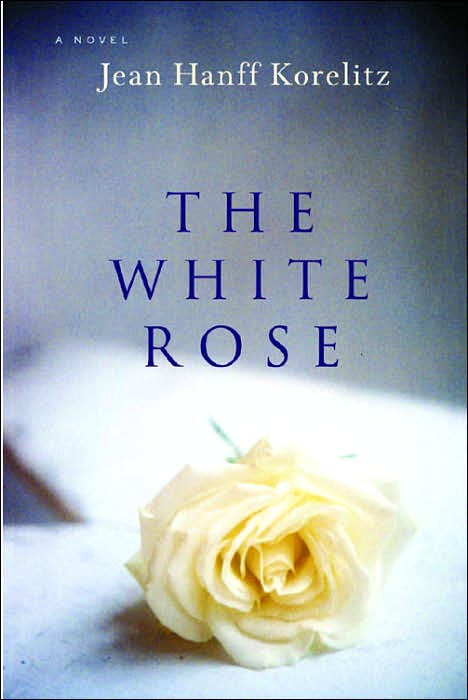
BOOK REVIEW: The White Rose by Jean Hanff Korelitz

In a complete departure from her previous novels, Jean Hanff Korelitz’s third novel is a modern retelling of Richard Strauss’s comic opera Der Rosenkavalier (The Knight of the Rose). Set in Manhattan and the Hamptons, The White Rose is the story of Marian Kahn, a professor and discoverer of the eighteenth-century adventuress, Lady Charlotte Wilcox, and Marian’s much younger lover Oliver, son of her oldest friend. Married for many years, and comfortably settled in her relationship, Marian is stunned to discover the passion that explodes when she meets a grown-up Oliver. Their relationship is a source of joy and misery for Marian, one that is made more difficult by the arrival of Marian’s cousin Barton, in town to announce his engagement to Sophie, a young graduate student in Marion’s department. As the lives of the four become increasingly entwined, Korelitz has many opportunities to meditate on love and its relationship to time.

Compared by many reviewers to Edith Wharton, Korelitz has a keen eye for the vagaries of the privileged classes. Reexamining New York Society’s views on adultery, social climbing, wealth and status, Korelitz presents the old money position through the characters of Marian and Caroline, Oliver’s mother, and the cutting views of gossip columnist Valerie Annis. The satire on this position is represented by Marian’s cousin Barton and contrary views are portrayed through Oliver, with much of the commentary coming in the voice of the adventuress Lady Charlotte.

One of the central points explored in The White Rose is whether happiness can come from wealth or status. Marian suggests that if people followed the example set by Lady Charlotte, they’d be happier.

“If she [Lady Charlotte] had gotten too attached to the idea of happiness coming from wealth or status, she would have spent most of her life feeling that she’s lost her chance to be happy, but she never linked those ideas together.”

Marian seems to be questioning herself in this passage, raising the question of why she can’t be free like Lady Charlotte and be happy with Oliver, overturning the status quo and walking away from society’s expectations of her. The characters in The White Rose fall out on two sides of this entrenched debate, lined up in the camps that fit with their place in New York Society’s hierarchy. Caught up in Society’s expectations, Marian seems unable to stir from the torpor induced by her wealth and position. Her minor rebellions from this set role – her affair with Oliver, publishing her work on Lady Charlotte and her relationship with Soriah, a fan of her book - still are not enough to enable her to follow the lead set by the adventuress.

Despite Marian’s mundane existence, she seems to exist in a world apart, her own “Aubergine Time”:

“There is a time in each day that is neither afternoon nor evening but something breathless in suspension between them when every particle of air is briefly infused with fierce, fierce color, one instant so utterly there, than gone.”

The White Rose provides a window into this time in Marian’s life, that moment when she is poised to choose between what is comfortable and a chance at happiness. Marian’s story causes us all to question what we would do when faced with our own “Aubergine Time.”

Jean Hanff Korelitz is the author of a book of poems, The Properties of Breath, and two previous legal thrillers, A Jury Of Her Peers and The Sabbathday River. She lives in Princeton, New Jersey with her husband, the Pulitzer Prize-winning Irish poet Paul Muldoon, and their children.

See the review as it is posted at Curled Up with a Good Book: The White Rose.

Monday, May 15, 2006

Ministry of Pain by Dubravka Ugresic

Today's reading item is Ministry of Pain by Dubravka Ugresic. It got bumped up the queue since the discussion groups started today at the Words without Borders Book Club.

For an interesting interview with Ugresic, visit the House of Mirth (thanks to the Literary Saloon for the link).

And check back, my review will be posted soon.

When worlds collide

Lately my reading appears connected. This week I was reading an advance copy of the new biography of Jane Jacobs (Jane Jacobs: Urban Visionary) and learning a great deal about the bulldozing "urban renewal" schemes of the 60s in major US cities. Then today I picked up Firmin by Sam Savage and it is sent in 1960s Boston, in a part of town (Scollay Square) designated for demolition and "renewal".

Makes me wonder what is going to connect next...

Friday, May 12, 2006

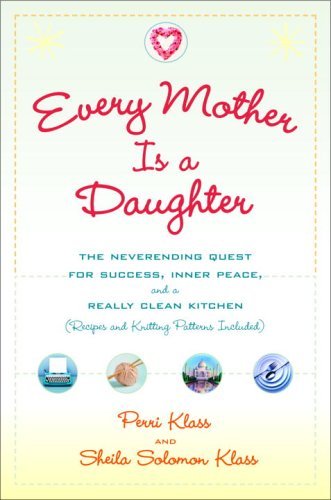
BOOK REVIEW: Every Mother is a Daughter by Perri Klass & Sheila Solomon Klass

What is it that makes the bond between mother and daughter so different from any other relationship? Is it the shared experiences? Or is it as Perri Klass and Sheila Solomon Klass contend in their book Every Mother is a Daughter: the neverending quest for success, inner peace, and a really clean kitchen (recipes and knitting patterns included) that every mother is also a daughter?

Klass and Solomon Klass have collaborated to write this engaging exploration of their relationship and the extent to which each has mirrored the life of their own mother. Both are published authors with distinct voices that fit well in a collaborative effort. Klass, a pediatrician, has a column in Knitter’s Magazine as well as writing non-fiction and fiction books. Solomon Klass is a retired English professor who writes fiction for adults and children.

Every Mother is a Daughter explores the stereotypes of gender and roles, especially as they pertain to the all-important role of feeding a family. Solomon Klass, raised in New York during the depression by Orthodox Jewish parents whose marriage was full of bitterness and conflict, internalized many of her mother’s fanatical beliefs about women’s roles. Escaping the bleakness of her silent childhood home right after high school, Solomon Klass carried many of her mother’s admonishments into her own marriage: men were not allowed in the kitchen; dinner must contain a starch, a green vegetable, a protein, and a fruit; and women should get dressed immediately upon rising.

Klass, born in Trinidad but raised in New Jersey, gently teases her mother for her quirks while marveling at her bravery and independence. While Klass deviates from her mother’s frugality and insistance on home cooked meals (dinners are often eaten out), she has carried on her mother’s legacy in raising strong and independent children, while working full-time herself.

Reflecting on all stages of their lives, Klass and Solomon Klass create a memoir written in two voices, the most compelling being the section on “Becoming a Mother, Becoming a Grandmother.” Solomon Klass writes so meaningfully on sharing the birth experience with her daughter that the experience stays with the reader for days.

As Solomon Klass states “this whole book is really about lives so blended as to be inseparable.” Perhaps that is all anyone wants, a relationship with their Mother that is so positive that all their lives are blended, not just childhood. Every Mother is a Daughter is a loving testament to the powerful bond between mother and daughter.

See the review as it is posted at Armchair Interviews: Every Mother is a Daughter.

Reading the World 2006

Would someone please help me understand how I missed this? And not just this year but last year also! The mind boggles...

From their website -> Reading the World 2006 is an exciting collaboration between booksellers and publishers to help bring international voices from around the world.

So even though it's already part way through this year's event, I'm going to try and do my part. Interestingly enough, I'm already reading The Ministry of Pain by Dubravka Ugresic (Translation by Michael Henry Heim), published by Ecco for review at Curled Up with a Good Book. I'll have to see what other international authors I can read yet this month.

Thanks to Chekhov's Mistress for promoting this important concept.

Sock Woes

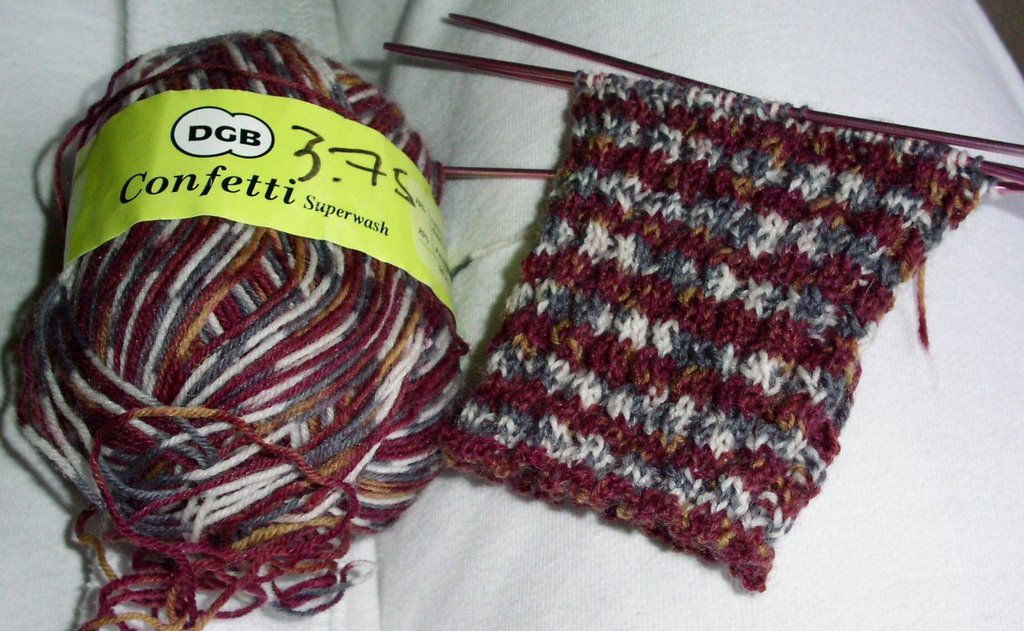
I knew I should try the sock on before now...but in a classic case of avoidance I was ignoring the potential problem. It's my first sock and I didn't want to jinx it prior to the gusset reduction. The thing is, it looked too big for my foot, but I was chalking that up to not having a clue about what the sock should look like.

Last night, halfway down the foot of sock one, I slipped it on and - you guessed it - it's too loose. So I face a dilemma, continue on, make sock two and just wear them around the house or rip back to the end of the slouch ribbing and start over on smaller needles.

I'm inclined to rip back so that I actually wear my first socks out of the house. Any recommendations?

They grow so fast

I love being an aunt, honourary or not. So when I get photos of the wee ones, I have to proudly share! Is the blog the equivalent of pulling photos out of one's wallet?

This is Isobel Mae - 4 months old and absolutely gorgeous. It never ceases to amaze me how quickly their personalities begin to show.

Thursday, May 11, 2006

The Amazing Lace KAL

I thoroughly enjoyed the 2006 Knitting Olympics so when I found out Chris had joined The Amazing Lace KAL I thought why not? The Knitting Olympics taught me just how much I enjoy lace knitting so here is a chance to expand my scope as a lace knitter.

I will have to ponder what lace project I'll pick for my teammate on this adventure. Will it be Convertible from the new issue of Knitty.com, Ella from Knitty's Fall 2005 issue, the Yarn Harlot's Snowdrop Shawl or something else that will highlight the beautiful, deep red alpaca lace-weight yarn I picked up recently.

Tuesday, May 09, 2006

BOOK REVIEW: Morehouse Farm Merino Knits by Margrit Lohrer

In the sea of recently published knitting books, Morehouse Farm Merino Knits: more than 40 farm-fresh designs quickly separates itself from the flock with its opening line: “Morehouse Farm began with a voodoo chicken.” An opening like that is difficult to live up to but while the patterns that Margrit Lohrer offers are simple, the book itself and its reasons for such simple patterns hold up admirably to that first sentence.

Morehouse Farm is well known for the sumptuous merino yarn they produce. This collection was designed by Lohrer to highlight the inherent beauty of merino yarn by designing to play to its strengths. Merino is one of the oldest breeds of sheep and has the finest wool, due to its tightly crimped and springy nature, making for finer, softer, and itch-free garmets. As Lohrer states about these patterns: “None of the patterns are particularly challenging, but all will yield attractive and functional knitted items…The patterns in this book are a starting point. Be creative…Knit what you want, the way you want it to look, feel, and wear.”

The patterns are divided into five sections: home, lace, children, accessories and sweaters. While Lohrer does specify which of her yarns to use for each pattern, weight and gauge information is provided so that knitters can substitute other yarn as desired. The patterns, while basic, are great foundation pieces that will provide years of knitting and leave room for individual creativity.

Lohrer’s introduction, scrumptious photos and in-depth details about Morehouse Farm make Morehouse Farm Merino Knits a worthwhile addition to any knitter’s library.

See the review as it is posted at Armchair Interviews - Morehouse Farm Merino Knits.

Further fuel for the Kaavya Viswanathan discussion?

Just in case you don't read Bookslut every day, check out this article from The Morning News. We need more words like schadenfreude in our daily lexicon.

Sunday, May 07, 2006

BOOK REVIEW: The Seas by Samantha Hunt

The Seas, Samantha Hunt’s debut novel, relates the coming of age story of a nameless 19-year-old young woman as she struggles to free herself from small town life and a terrifying destiny. Branded by her father’s suicidal walk into the ocean eleven years earlier, and by his insistence that she is a mermaid, the narrator is consumed by her love for the Gulf War Veteran Jude – to the point that it begins to affect her vision. Terrified that her mermaid self will destroy the object of her love, and isolated from a mother who “collects silence inside her”, the narrator spends her time waiting:

“Waiting to grow up. Waiting for my father to return. Waiting for Jude. Waiting for something big to happen.”

Caught in a place between reality and myth, her delusions lead to actions that ensure she will never escape the ocean’s pull and her increasing separation from reality.

Hunt has created a poignant yet creepy novel, filled with images of water that seem to overwhelm the narrator. Desperate to fulfill her destiny, yet caught by her obsessive love for Jude, this young woman is caught by the dilemma faced by Undine, the Elemental of Water and goddess portrayed by Homer. Her love for Jude threatens her true destiny as a water spirit, only through loving him and giving herself to him can she truly become a woman and gain a soul. Isolated from her mother, the young woman has only her father’s mythology and her own desires to guide her into womanhood.

Capturing the essence of mermaid, or water spirit, legends in The Seas helps Hunt create a truly unique tale that illuminates her personal views on being a young woman in modern times. Hunt describes her choice of topic thus:

“Mermaids, as of late, have been co-opted by Hallmark, Disney, and the like. But mermaids are terrifying…They are gruesome distortions of the female form that speak to the human fear of females, particularly females as sexual beings. I thought using a mermaid as narrator would be helpful in explaining how truly awkward it feels to grow from adolescence into a woman in America.”

Hunt creates a mythology that suggests by remaining cold, a true mermaid, the narrator can gain freedom. She must put her father and Jude behind her, and adopt the attitude of the ocean, which “is full of everything except mercy.” If she doesn’t she is destined to suffer a fate similar to Undine, drowning her love with her kisses.

Words have power in The Seas - literal power. The narrator, falling on type, finds the letters have formed words in her bruises. Words also are the narrator’s only connection to her perceived reality, represented by her grandfather and his fascination with dictionaries. Her mother, used to silence, finds words too precise. The narrator finds water full of words with many possible meanings. It is here that Hunt leaves the reader – a novel that is open to whatever ending each finds within the words.

Samantha Hunt, an artist, writer and teacher at Pratt Institute in Brooklyn, spent four years writing The Seas. As she explains in an interview with Powell Books:

“First I wrote this book as a collection of two-hundred-fifty-word stories. Two hundred of them. Then I put it aside and I had the bad idea to write it as a book of poems, which is around somewhere still. But I put it aside again, and when I went back to it I made it into The Seas. That's why the novel took four years.”

Her next novel - The Invention of Everything Else - on the life of Nikola Tesla and early electrical experiments in America, is to be published by Houghton Mifflin in Spring 2007.

See the review as it is posted at Curled Up with a Good Book - The Seas.

Saturday, May 06, 2006

18th Annual Elora Festival Book Sale

What a morning! Despite the cold wind and periodic drizzle, the crowd queued to get into the sale was quite long. We arrived about an hour and a quarter before the doors opened and were still about 50th in line. By the time the doors opened, the line snaked around the parking lot and had about 150 people in it.

The Elora Festival Book Sale raises money for the Elora Music Festival and, I think, is the best book sale in this area. So it goes into my calendar as soon as I get a new one each year.

So what did I buy? Well I should start by saying that I was on a much tighter budget this year so I was only able to spend half of what I did last year.

The Haul
8 books from my wish list
- House of Leaves by Mark Z. Danielewski
- Merde Actually by Stephen Clarke
- Publish and Perish by James Hynes
- The Sex Life of my Aunt by Mavis Cheek
- Lucifer's Shadow by David Hewson
- The American Boy by Andrew Taylor
- River of the Brokenhearted by David Adams Richards
- Lucky Jim by Kingsley Amis

3 Hardcovers to replace my paperback copies
- A Whistling Woman by A.S. Byatt
- Foucault's Pendulum by Umberto Eco
- The Light Years by Elizabeth Jane Howard

11 other books

Total? 22 books for $54.75!

Next year my plan is to be there when it opens for the initial pickings, have lunch and then go back in the afternoon for a more leisurely perusal.

So reserve May 5 & 6, 2007 for next year's sale!

Friday, May 05, 2006

A Cry for Help

The emergency call went out from Audrey - hundreds of books at the Caroline Street Recycling depot that need saving. There were a couple of workers trying to sort them out and make sure readable books were in appropriate bins, but they said there were too many and they would have to haul some away. In her words - "Get down there and rescue some of those books!"

As a member of the local BookCrossing group, it is my duty to rescue readable books and make sure they reach new, appreciative readers. So I did my part and went over, sorted through some of the bins and rescued about 50. I've been busy registering all of them to my shelf at BookCrossing and even found two wish list books, always a treat!

Overall, not a bad visit to the recycling depot. You never quite know what you'll find.

The real book event this week? That would be the 18th Annual Elora Festival Book Sale on Saturday. I'll be in line an hour before the doors open. This is my yearly book sale pilgrimage and I can't wait to see what treasures I find this year.

Wednesday, May 03, 2006

A Few Technical Changes


You might have noticed a few minor changes at the bottom of the navigation bar. I added a SmartFeed courtesy of FeedBurner and have claimed my blog at Technorati.

Why? Well for two reasons...

1) This post by Bill Sweetman at One Degree.
2) I'm trying to learn as much as possible about Blog Optimization and decided to test it out here.

Stay tuned!

Monday, May 01, 2006

Le Sock

I turned my first heel! You'll have to imagine the happy dance going I'm afraid. The sock (Slouch socks from Not Just More Socks) traveled with me to Toronto for a day of fun at the Creative Sewing and Needlework Festival, although no knitting actually happened there.

I have to admit that a fair bit of frogging did occur as I was working on the heel. I managed to misread the pattern while doing the heel flap and then a second time while actually turning the heel. Despite all the frogging, I am really enjoying the process. Now for some gusset work!

Oh, and the CSNF was fun and I took a short class on crocheting rag rugs. While it was interesting and I ended up with a great hot pad, my wrist ached for two days afterward so I suspect this is not the craft for me.

Friday, April 28, 2006

TGIF - or what to do when you have a d'oh day

I don't know if anyone else has these days when you wake up 20% less smart than the day before? Recently I've had a few days like this and today is one of them. You wake up and it takes forever to figure out what you're supposed to be doing. Thinking seems slower - thank goodness you haven't forgotten how to get yourself dressed.

You feel like you are thinking through a head of mattress stuffing. You are no longer your normal verbally acute self. Words escape you at an alarming rate. You suddenly understand the term "slow" because it feels like someone has hit the mute button on the smart part of your brain.

Thank god it is Friday so that I'm not going to be a danger to the population for the next two days by trying to negotiate my way through work. Eek!

Monday, April 24, 2006

Have Sock, Will Travel

I have joined the sock camp. I have to confess that until now the only socks I've knitted were done with chunky yarn from Pattons which turned out a sock that was not wearable with shoes.

What first began to draw me to today's world of socks was attracted by the beauty of the hand-dyed sock yarn. I love the colour combinations people put together to create the lush colours (which is what sent me on a hunt to Lettuce Knits for some of the coveted Socks that Rock yarn). But this past weekend, I experienced some of the larger benefits of the sock phenomena.

Portability
- I pack for the BookCrossing convention in a frenzy of book lust. Box of books to release - check. Socks and underwear - check. Books wrapped in pretty paper for swapping - check. Halfway to Toronto I realized with extreme horror that I had forgotten to pack knitting! How was this possible? What was I going to do during the workshops on Saturday?

Now do not despair too long since, luckily for me, I was staying with a fellow knitter who was willing to let me dive into her stash! Heather generously allowed me to snag some sock yarn and needles so that I could keep my hands busy during Convention meetings on Saturday. (No really, I am getting to the portability part..)

Sitting there in the workshop I realized just how handy socks are. They are small and easily slip into a bag. The double-pointed needles lay flat for storage in a purse. The project doesn't take up a lot of space around one either - unlike a bulky sweater. Wow!

Community - I wasn't the only sock knitter in the room! There were other sock knitters up near the front and they quickly sensed other socks in the room and came round for a look-see. Many non-knitters are fascinated by someone knitting socks. I think it is all the needles sticking out, makes the entire process seem much more mysterious than it really is.

Am I addicted? Too soon to say but definitely I have entered the first flush of romance with this knitting phenomena. And this cute slouch sock with be journeying with me to the Creative Sewing and Needlework Festival this weekend. Perhaps I will be able to find it some attractive mates to join the stash...

Saturday, April 22, 2006

BookCrossing Convention Update

I can't believe the number of books! Table after table of books people brought to share with other BookCrossing. I think there were four 8 foot tables chock full of books. I managed to restrain myself and only came out with about 15 but who knows how good my restraint will be today...*whistle*.

I had a lot of fun "meeting" so many BookCrossers and BookRelay in person! Shouts out to all my book buddies...here's to lots of fun today and tomorrow.

Friday, April 21, 2006

So cute!

I just had to post this new picture of Aaron with his Mom, Jenn. He's grown so much and this is one of those priceless shots.

It's Convention Time!

BookCrossing convention here I come! I'm going to meet lots of my BookRelay friends and swap out tons of books with other book lovers. I can't think of a better way to spend a weekend.

I'm packed up and ready to go with lots of books sent on ahead with Rhonda and Jennifer. Rhonda spent the last two nights visiting from Indiana and is spending today with other BookRelay friends visiting BookCloseOuts and Niagara Falls. Me? I'm at work, sneaking a few minutes here to post since I won't be back on again until Sunday night when I trundle home with my pile o' books with a book hangover. LOL

Wednesday, April 19, 2006

Today's Post...or How not to spit water through your nose

Don't read Walter Kirn while drinking water...or you will end up drenched.

Found today on BookSlut...how does Kirn come up with this stuff?

If unborn children really had rights, the infant daughter of the actress Katie Holmes and the temporarily-humanoid immortal starseed that styles itself 'Tom Cruise' would have been delivered by a lawyer. Breaking the absolute silence of the delivery room, the lawyer, on the infant's behalf, would have sued for spiritual guardianship and demanded that all profits earned from sale of the child's story and image-- including 'virtual' profits in the form of publicity for its parents -- be deposited in a trust account to fund its lifelong psychotherapy needs. It would also be stipulated that such therapy could not be interfered with or curtailed by 'Cruise' or his religious representatives.

Monday, April 17, 2006

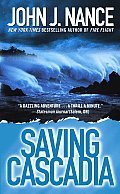
BOOK REVIEW: Saving Cascadia by John J. Nance

John J. Nance’s 17th book, Saving Cascadia, departs from the formula used in many of his earlier novels, which focused much of the action in airplanes. While fans of the genre may be disappointed in this new direction, they will still get some edge-of-their-seat flying time - just in helicopters rather than jetliners – combined with a ticking time-bomb in the form of an earthquake.

Seismologist Dr. Doug Lam has spent years researching his theory of Resonant Amplication: the idea that continuous small resonances sent into a “locked zone” can eventually trigger the big one for the Pacific Northwest, an earthquake larger than any the region has seen since the Alaska earthquake of 1964 or the largest tsunami to hit the region which was triggered by a massive earthquake in 1700. For 300 years, seismic activity has been building up in the Quilieute Quiet Zone, just waiting for the trigger to release another magnitude 9+ earthquake.

All someone needs to do to trigger that major catastrophe is to “pull the plug” on the pent-up seismic activity, and construction of Cascadia Island’s new casino resort may have done just that. Now Doug has to figure out a way to stop the devastating tsunami he knows could take many lives at any moment and save the woman he loves.

Saving Cascadia has all the requisite features of an eco-thriller: a discredited scientist, impending natural disaster, politicians who refuse to see the truth, conflict between family members and a heroine on the run from unknown bad guys. Rather than allowing this novel to become just another formulaic thriller, Nance uses his significant scientific knowledge to raise the bar for the rest of the genre.

Having completed extensive research for his 1988 book on earthquakes, On Shaky Ground, Nance is dealing with familiar subject matter in this offering. Solid research is a prerequisite for any author who wishes to add a true psychological thrill to their adventure tale. Presenting a scenario that has the potential to happen creates greater tension and engages the reader’s imagination more quickly. Here Nance handles the earthquake research with confidence, providing enough context to create credibility without bogging down the pacing with too much background.

Where Saving Cascadia does fall flat is in the romance between Doug and Jennifer Lindstrom (pilot and CEO of Nightingale Aviation). The relationship felt forced, as if it was added purely to create additional tension, but only succeeded in hindering the exact tension it was meant to enhance. Since there seemed to be little spark there, Jennifer’s supposed jealousy felt contrived and distracted from the action spinning quickly out of control.

Nance displayed a much more able hand in the relationship between Jennifer and her father, Sven. The complex psychological mess swirling between them rings true and aids in fleshing out both their characters, while also ratcheting up the price-tag on the natural disaster when their conflict threatens to hinder rescue operations. The believability of these characters creates a stronger emotional bond for the reader, pulling them deeper into Nance’s world.

Unlike many fast-paced thrillers, the surprise twist in Saving Cascadia came completely out of left field, taking this reader by surprise. In hindsight the clues were present, but so well integrated into the plot that they didn’t stand out like a beacon in a lighthouse.

John J. Nance has built an impressive body of work since first publishing in 1990: 13 fiction and 5 non-fiction. A licenced commercial pilot, veteran of the US Air Force, internationally recognized air safety analyst and advocate, author and public speaker, he folds all this technical knowledge into his writing. Saving Cascadia, released at the end of January 2006 in mass market paperback, and the soon to be released Orbit (March 2006) are his newest works.

See the review as it is posted at Curled Up with a Good Book - Saving Cascadia.

BOOK REVIEW: The Mercy of Thin Air by Ronlyn Domingue

“I learned the constellations when I was little…At one time, I believed the mythological creatures and objects were truly there, held in place by giant pins. The light points of their configurations, you see. I thought if any of those pins came loose, they would be at the mercy of thin air – and they’d fall to the ground and crush me. So for a couple of years, I’d only go outside on cloudy nights. I decided that would give them something on which to land, other than me.”

An astonishing novel is always a gift to readers but, when that gift comes as a debut novel, the reader is left floundering. How can this illuminating author be so in tune with her craft so early in her career? Ronlyn Domingue has gifted the world with a literary novel that is unique on so many levels; a novel that compels the reader to think and to challenge their conception of reality and love, as well as the construction of the novel itself.

The Mercy of Thin Air is first and foremost a novel of discovery. Set in the past, present and “between”, on the surface level, it tells the story of Raziela Nolan, who dies before experiencing most of life. Razi reflects on growing in the 1920s as a woman determined to become a doctor and who becomes a fierce advocate for women’s emancipation and reproductive rights. Through her narration, readers are slowly drawn into the story of her love affair with Andrew and the circumstances of her death. Interspersed into these reminiscences, Razi spies on the turbulent relationship of Amy and Scott, a young couple whose home she currently inhabits.

On a deeper level, this novel delves into philosophy, on the nature of love and loss, existence and memory. Grief defines characters in The Mercy of Thin Air. It is a buffeting force that polishes some into individuals who are lean in emotion, able to withstand the all-consuming nature of grief. Others give into loss and live in the pit of despair. Domingue provides readers with subtle examples of the role this enigmatic emotion can play in our lives and beyond. Emotions, for some, are the mooring that holds us in place – the pins – which can be dislodged by an overflowing of strong feelings, leaving us in a free-fall where anything can happen. This theme – “the mercy of grief” – creates a strong foundation in the novel.

The Mercy of Thin Air also provides an interesting insight into the history of women’s rights. Both Razi and Amy are heavily involved in activism and it is this political aspect of their natures which draws Razi to explore the mysteries surrounding Amy’s life. Domingue cleverly utilizes this plot line to force readers to confront their personal views on reproductive and gender issues.

The Mercy of Thin Air began as a short story, with the second draft being submitted as Domingue’s thesis at Louisiana State University. The comparisons to Alice Sebold’s The Lovely Bones are inevitable but, as Domingue states in an interview with Cynthia Harrison (February 12, 2006):

“As for The Lovely Bones, it wasn’t an influence. The Mercy of Thin Air began as a short story in January 1999, and I started to work on it as a novel shortly after that. I didn’t read Sebold’s novel until I was nearly done with the last draft of The Mercy of Thin Air. I was curious about her novel but didn’t read it so that it wouldn’t interfere with my creative process. I knew comparisons would be inevitable, and I wanted to be prepared when agents and others asked.”

The character of Lionel, someone Razi meets “between”, acts as the “chorus” – asking the questions Razi is unable to and focusing the reader’s mind on the nature of existence. What is the nature of those “between” and how is it that they still “are”? Domingue has addressed that question by researching quantum physics and various religions and philosophies, all of which play a part in shaping this extraordinary novel. She allows the question to exist throughout and she forces readers to draw their own conclusions, rather than taking the easy way out by answering.

In the end, The Mercy of Thin Air is a different novel for every reader. For some, it relates the quantum physics answer that all possible actions/lives exist at once. For others, it is the Buddhist concept that the past, present, and future are all found in the present moment. Still others will find it to be, as Domingue states, “…about how fragile we are as physical and spiritual beings.”

See the review as it is posted at Curled Up with a Good Book - The Mercy of Thin Air.

A Worrying Trend - Could this be a good thing?

"Several trends are driving the popularity of the memoir today. One is the public's continuing fascination with reality TV. The programming genre's obsessive interest in the lives of ordinary people and B-List celebrities has migrated to the printed word." From the Wall Street Journal via BookSlut

What happened to the good old autobiography? Is it a dying artform?

Continuing controversy over the Harry Potter books

A Gwinnett County, Georgia, parent wants to remove the Harry Potter books from the county's public school libraries. Why? I'm glad you asked:
On the forms, she wrote that she objected to the series’ “evil themes, witchcraft, demonic activity, murder, evil blood sacrifice, spells and teaching children all of this.” She wrote she had not read the series because it is long, and she is a working mother of four.

I don't know which is my favorite part: the fact that she didn't read the series "because it is long," or the reference to "evil blood sacrifice." (Is there good blood sacrifice?) Atlanta Journal-Constitution readers react to the controversy, and thankfully bring some perspective to the issue:

"I am a Christian. I feel that Christian rights are being abolished in this country. Everyone talks about our views being pushed on them. But what about our beliefs? Don't we have any rights at all?"
— Posted by "red" on the message board

I have heard the Constitution has something to say about free expression and nonestablishment of religion, but I haven't read it, because it is long. (Thanks to Leila and Tim for the links.)


This was posted on BookSlut today and I had to follow the link through to the article in the Atlanta Journal-Constitution. The reader response that got me was this one:

"I totally agree with this parent seeking to have Harry Potter books removed. If we suggested the Bible be on a list of mandatory books for students to read as a part of their novel requirement, there would be an immediate protest. Therefore, as a Christian, we must begin to take a stand and begin to show accountability for what our children are being taught and exposed to."
— Posted by Mendi on the message board (ed. bolding added by me)

This raises an interesting point. I'm sure most parents would have no problem with the Bible being read as a novel as part of a literature course. What most people object to, I'm sure, is it being taught as religion in public schools.

I, personally, am all for studying the Bible as an important piece of literature since it has had such an influence on common literary themes, just like Greek and Roman myths have, and I know I studied those in school.

*ducks in preparation for the flames*

BookCrossing Convention

This weekend is the annual BookCrossing Convention and this year it is being held in Toronto. I'm excited to final get a chance to meet many of the members that I've spent the last year and a half chatting with online. So if you're in Toronto this weekend and you spot a book in the wild, pick it up and help in on its journey - you'll make a bookcrosser happy!

Saturday, April 15, 2006

Muriel Spark died


I saw this on BookSlut today. I love the work of Muriel Spark and I'm so sad to hear that she has died. Author of 20 books, Muriel Spark is probably most famous for The Prime of Miss Jean Brodie.

I have been collecting her works for some time now and look forward to truly learning to know the work of this fabulous author. The literary world has lost another star.

Lettuce Knits - I finally managed a visit!

This morning I paid a visit to Lettuce Knits. I keep hearing about this fabulous knitting store on the various knitting blogs. Their recent newsletter announcing the arrival of a new shipment of Socks that Rock meant that an immediate visit was required! Luckily I had already planned an overnight trip to Toronto to visit my friend Jennifer.

What a fantastic shop and yet so compact. The Socks that Rock were prominently displayed in the front window and after about 15 minutes of debate, the Moss Agate won out. I also left with a beautiful double point set of US #1 Rosewood needles from Lantern Moon.

After the yarn shopping, we wandered the shops in Kensington Market. I picked up some spices and a fun pair of sequined mules in spring green.